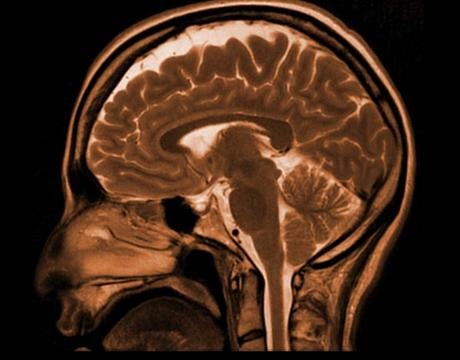
Fall in shower with headache and nausea - what's the diagnosis?
Scroll down to access the case
INTERESTING CASES ARE BEST VIEWED ON A DESKTOP DEVICE
.png)
Salient findings:
Symmetrical hypodensities in the bilateral globus pallidi of the basal ganglia
Principle Diagnosis:
Carbon monoxide poisoning.
Other important findings:
Relative preservation of other regions of the basal ganglia, including the putamen, caudate and thalami.
No involvement of the cortex, although this is better delineated on MRI and no gross abnormal density in the splenium of the corpus callosum.
Learning points:
CT and MRI findings of carbon monoxide (CO) poisoning:
CT: low density in the bilateral globus pallidus
MRI: High T2/FLAIR signal, low T1 signal (unless haemorrhage).
There can be restricted diffusion and patchy peripheral Gadolinium enhancement in the acute phase.
Other brain areas are also implicated with low density / high T2/FLAIR signal within the white matter of the supratentorial brain, cerebellum, insular cortex and medial temporal lobes.
Further reading:
Kim, D. M., Lee, I. H., Park, J. Y., Hwang, S. -B., Yoo, D. S & Song, C. J. (2017). Acute carbon monoxide poisoning: MR imaging findings with clinical correlation. Diagnostic and Interventional Imaging. 98 (4): 299-306.
O’Donnell, P., Buxton, P. J., Pitkin, A. & Jarvis, L. J. (2000). The magnetic resonance imaging appearances of the brain in acute carbon monoxide poisoning. Clinical Radiology, 55 (4): 273-280.
Pathophysiology of CO poisoning:
CO has a 250-fold greater affinity for binding with haemoglobin compared to oxygen, therefore it will preferentially bind to Hb readily and will displace oxygen, thereby reducing the O2-binding capacity of Hb.
Other CO effects are the inhibition of mitochondrial respiration leading ultimately to decreased ATP production within tissues, notably the brain and heart.
Further reading:
Rose, J.J., Wang, L., Xu, Q., McTiernan, C. F., Shiva, S., Tejero, J. & Gladwin, M. T. (2017) Carbon Monoxide Poisoning: Pathogenesis, Management, and Future Directions of Therapy. Am J Respir Crit Care Med, 195 (5): 596-606.
Differentials for basal ganglia abnormal density/signal?
Other toxic leukoencephalopathies:
Methanol – focuses more on the putamen compared to the globus pallidus and has propensity to cause haemorrhagic necrosis.
Cyanide – Haemorrhagic necrosis of the basal ganglia, usually striatum, as well as pseudolaminar necrosis of the cerebral cortices
Uraemic encephalopathy – oedema in the basal ganglia including putamen and globus pallidi (lentiform fork sign) as well as the cortical involvement.
Organophosphate ingestion (non-haemorrhagic and usually putamen and caudate nucleus)
Neonatal hypoxic ischaemic encephalopathy in term infants – predominantly basal ganglia (thalami and lentiform) as well as rolandic abnormalities.
Metabolic abnormalities such as Wilson’s disease (most commonly putamen in the basal ganglia) but also of the midbrain, thalami and globus pallidus.
What is Gas geyser syndrome?
Gas geysers are used in many regions globally for instant water heating using Liquid Petroleum Gas (LPG). If there is incomplete combustion of the hydrocarbons in the LPG this can cause carbon monoxide production, and in these cases, if there is not effective ventilation or the presence of a flue system to reduce the CO, then accumulation can occur.
Gas geyser syndrome has been coined as a term for neurological sequelae of flueless LPG gas geysers often fitted in bathrooms resulting in acute CO poisoning.
Interesting further reading from Uniyal, A; Alhyan, P; Bhaskar, V & Batra, P. (2025). Gas Geyser Syndrome: A Silent Killer in the Bathroom. Indian Journal of Public Health 69(3): 350-352
Clinical information: 58-year-old male presents with upper GI bleeding ?
Clinical information: 77 year old male presents with central abdominal pain.
Clinical information: 36 year old male. Shortness of breath and chest pain.